

Fineness, counts, and secrets of the most precious yarn processing
Cashmere is one of the most prized and sought-after materials in the world of fashion and apparel. Its softness, lightness, and warmth make it a favorite among luxury consumers and artisans. However, many people do not fully understand the various gauges and counts of cashmere yarn, nor the twisting process that affects the final quality of the product. In this article, we will explore these aspects in detail.
Cashmere is obtained from the underfur fibers of Cashmere goats, native to the Tibetan Plateau area, particularly in Mongolia, China, India and Nepal. Its production is laborious: to obtain a kilo of fiber, the furs of about 3-5 goats are needed, which are combed by hand during the spring, when their fur is particularly soft. This process requires a lot of attention and craftsmanship.
In the world of cashmere, "count" refers to the finish and quality of the fibers being worked. Common counts include:
The choice of the title of a yarn depends on the final use of the product and the preference of the consumer. For example, a 2-ply cashmere may be more suitable for everyday items, while a 4-ply is perfect for high-fashion or winter-specific items.
The fineness of cashmere is a determining factor in its quality. The finer the fiber, the softer and lighter the final product. Cashmere fibers generally range from 14 to 19 microns:
Twisting is a fundamental process in the production of cashmere yarn. It consists of twisting two or more strands of fiber together to form a single, stronger and more resistant yarn. This step not only improves the strength of the yarn, but also affects its softness and the final appearance of the fabric.
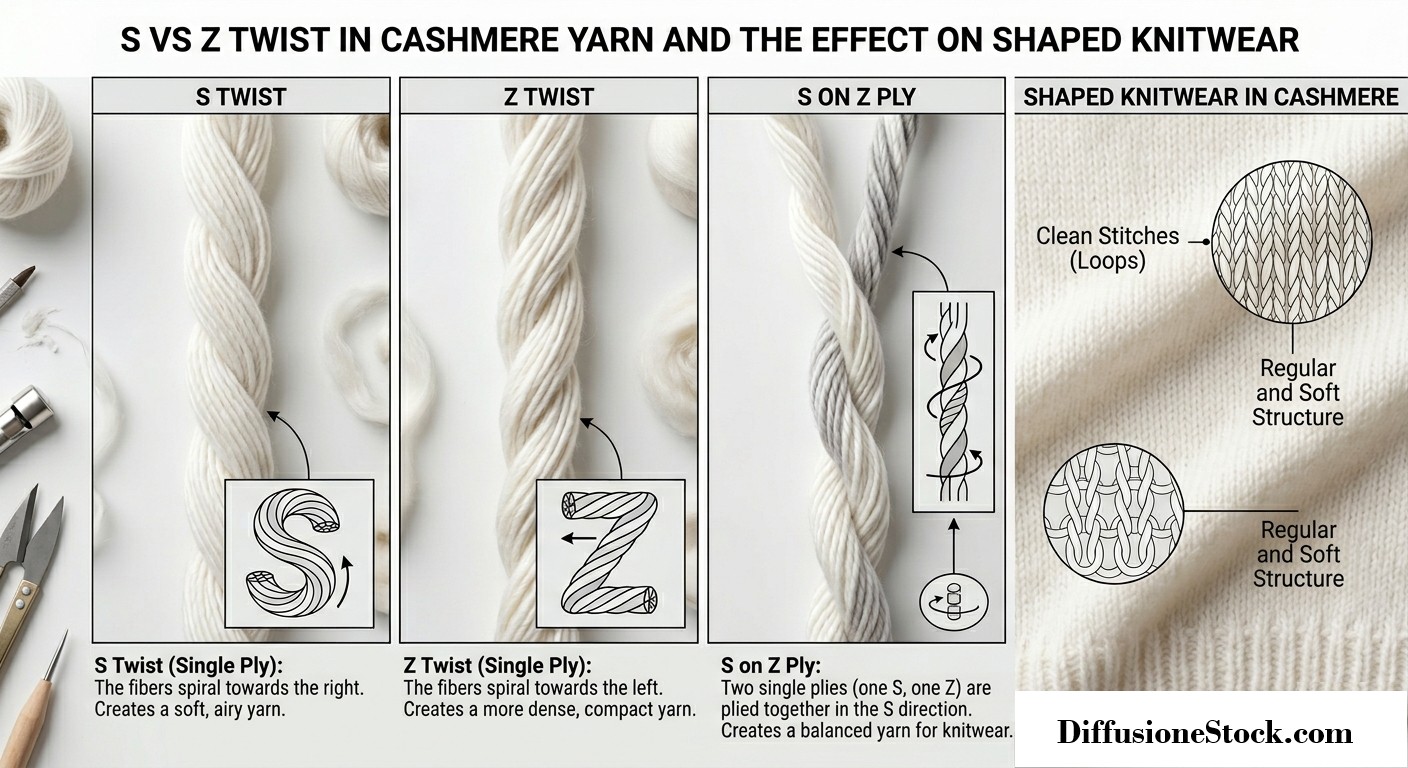
Twisting techniques can vary. A tighter twist produces a stronger yarn, while a looser twist offers more softness and volume. The choice of twisting technique depends on the type of final product you want. For example, for a sweater worn every day, a tighter twist might be preferable, while for a high fashion accessory, a looser twist will be ideal.
Specifically: The twisting process to form the yarn is very similar to braiding hair. 2-ply yarn is made up of two threads twisted in opposite directions "Z and S" and then twisted together to create strength. Using 2-ply yarn means you want to offer a quality product. A sweater made with a single strand has movement only in one direction called "Z" or "S", so unless it is designed exquisitely, it will lead to the deformation of the garment.
A useful example of a multi-thread pattern to understand specifically is the following:
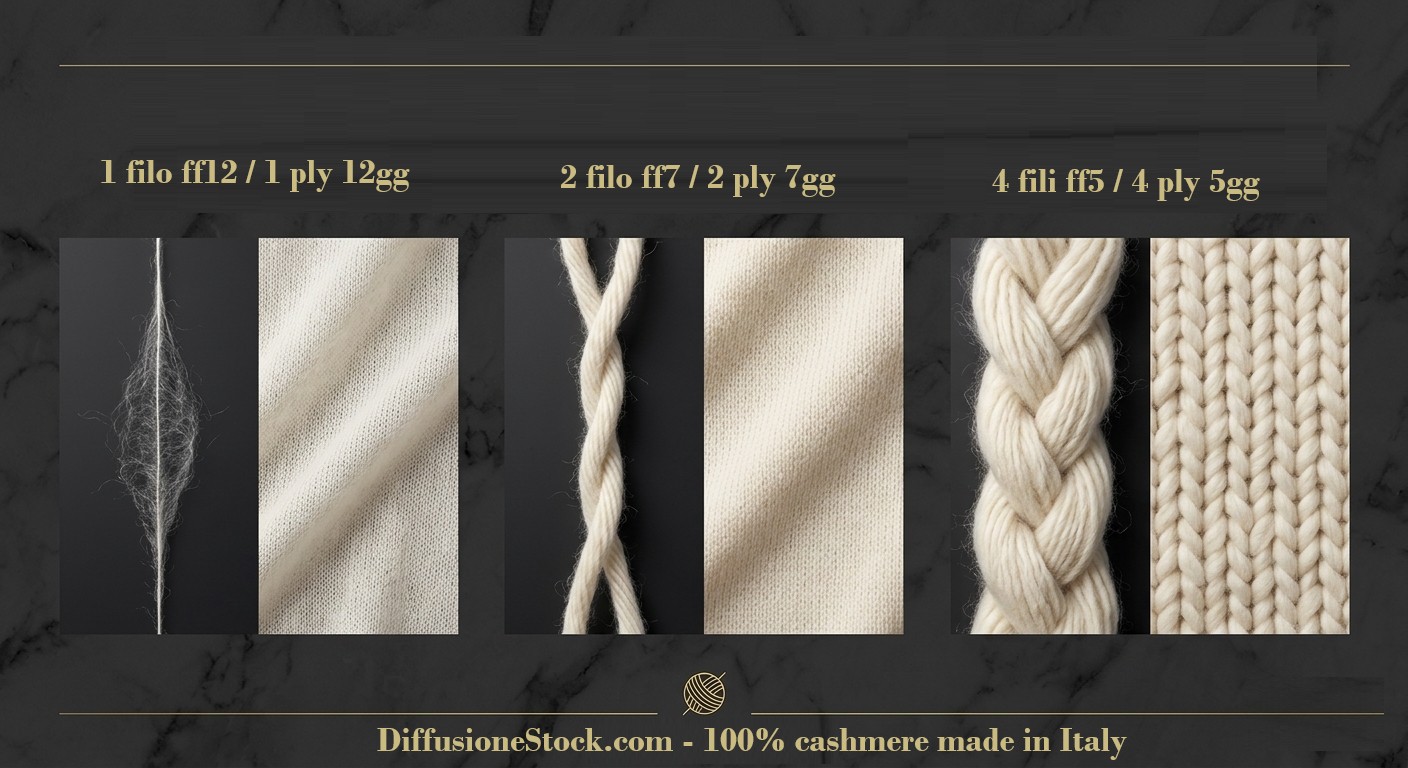
The lower the gauge number, the thicker the sweater is knit but slightly looser "with a loose knit". The higher the gauge number, the denser the sweater is knit and therefore with a tight knit.
A crucial aspect of purchasing cashmere garments is their care. To ensure the longevity of cashmere products:
For more information on the maintenance and care of cashmere
Cashmere remains one of the most popular materials in the fashion industry, thanks to its unique characteristics of softness, insulation and versatility. Understanding the various counts and finenesses of the yarn, as well as the importance of twisting, is essential for anyone who wants to invest in high-quality cashmere garments. With the right care and attention, cashmere items can last for years, maintaining their beauty and functionality.
In a world where sustainability is becoming increasingly important, it is also crucial that consumers choose ethical and responsible producers in the selection of raw materials and in the processing of cashmere. Only in this way we can guarantee the future of this precious material, continuing to enjoy its comfort and elegance.
Access our ready-to-ship catalog of men's and women's knitwear and accessories, a complete wholesale collection for fashion retailers.
About us